There is something inherently captivating about a profile captured in stone or shell. For the Victorians, these miniature portraits: commonly known as lady head relief brooches or cameos: were more than just jewelry; they were a fusion of classical appreciation, personal sentiment, and high fashion. Today, these pieces remain a staple for collectors who appreciate the meticulous craftsmanship of a bygone era.
At Jewelry and More Auctions, we are currently seeing a resurgence in the popularity of these "relief" treasures. Whether you are a seasoned collector or a newcomer looking to add a touch of 19th-century elegance to your wardrobe, understanding the nuances of these pieces is essential. From the material of the carving to the intricacy of the setting, every detail tells a story.
The Victorian Profile: A History of Elegance
The Victorian obsession with cameo and relief jewelry was largely fueled by Queen Victoria herself. Her fondness for these pieces turned them into a mandatory accessory for the upper and middle classes. Unlike contemporary mass-produced jewelry, Victorian relief brooches were often hand-carved, making each profile unique.
The term "relief" refers to the technique where the design is raised above the background surface. This is the opposite of "intaglio," where the design is carved into the material. The lady head motif typically depicted Greco-Roman goddesses, mythological figures, or idealized versions of Victorian women. These profiles were seen as symbols of refinement and intellectual curiosity, often reflecting the wearer's appreciation for the Grand Tour and classical antiquity.
What to Look For: The Carver’s Hand
When you are browsing an auction, such as our current live auctions, the first thing you should assess is the quality of the carving. Since these were carved by hand using small steel chisels called "bulins," the level of detail can vary significantly between artists.
1. The Hair and Drapery
A high-quality relief brooch will showcase incredible detail in the subject’s hair. Look for individual strands, curls, or braids that seem to defy the hardness of the material. Similarly, the "drapery": the clothing or fabric around the neck: should have fluid, realistic folds. If the carving looks "soft" or blurry, it may have been worn down over time or was simply a lower-quality piece to begin with.
2. Facial Features
The nose is often the tell-tale sign of a master carver. In Victorian cameos, a "straight" Roman nose was the standard of beauty. Look for a sharp, clean line. If the nose is chipped or bulbous, it significantly affects the value. The expression should be serene, and the eye should be delicately rendered.
3. Depth and Undercutting
Superior carvings feature "undercutting," where the carver has removed material behind a curl of hair or a chin to create a three-dimensional effect. When you hold the brooch at an angle, the lady’s profile should stand out prominently from the background.

Materials: From the Sea to the Earth
The material used for the relief carving determines both the look and the durability of the brooch. While we often think of "cameos" as being made of shell, the Victorians utilized a variety of mediums.
Shell (Conch and Sardonyx Shell)
Shell is the most common material for Victorian relief brooches because it is relatively soft and easier to carve than stone. Collectors typically look for:
- Cassis Madagascariensis (Emperor Helmet shell): Known for its dark brown background and white foreground.
- Cassis Cornuta (Horned Helmet shell): Which offers a more orange or "carnelian" colored background.
- Sardonyx Shell: Characterized by a flat, dark background that makes the white profile pop.
Hardstone (Agate and Onyx)
Stone cameos are far rarer and more valuable than shell. Because stone is much harder to carve, these pieces required an immense amount of skill and time. Agate and onyx were favorites because of their natural layers of color. A master carver would use the white layer for the face and the darker layer for the background.
Lava and Glass
- Lava: Carved from volcanic rock (typically from Vesuvius), these brooches are often high-relief and come in earthy tones like tan, gray, and olive. They were popular souvenirs for Victorians on their Grand Tour of Italy.
- Glass/Paste: Some "reliefs" were actually molded glass, sometimes called "sulphides." While not hand-carved, these are still highly collectible for their unique colors and designs.

The Setting: Framing the Masterpiece
The frame of a relief brooch is just as important as the carving itself. In the Victorian era, settings were often as ornate as the jewelry they held.
- Gold and Silver: High-end pieces were set in 10k, 14k, or 18k gold. Many Victorian pieces use "silver topped gold," where silver was used to set any surrounding diamonds or pearls to enhance their brilliance.
- Gold-Filled and Pinchbeck: For the middle class, gold-filled or "Pinchbeck" (an alloy of copper and zinc that looks like gold) was common. These frames often featured intricate "cannetille" (wirework) or "repoussé" (hammered) designs.
- Safety Features: Victorian brooches originally featured a "C-clasp" without a locking mechanism. Many collectors prefer pieces that have been retrofitted with a safety catch, though "purists" often look for the original long pin that extends past the edge of the frame.
Current Auction Highlights: Over a Dozen Treasures
If you are looking to start or expand your collection, now is the perfect time. At Jewelry and More Auctions, we are currently featuring a magnificent selection of these antique treasures. We have over a dozen Victorian lady head relief brooches available in our current catalog.
Whether you prefer the warmth of a shell carving or the architectural feel of a lava stone piece, you will find something to love in the following lots:
- Lots 329, 330, 331, 332, 333, and 334
- Lots 335, 337, 338, 339, 340, and 368
Each of these pieces has been selected for its unique charm and historical significance. You can view them and start your bidding journey on our live auctions page. If you are new to the process, we recommend reading our guide on how to bid on live online auctions to ensure you don't miss out on your favorite lot.

Modern Styling: Vintage Charm for the 21st Century
One of the best things about Victorian relief brooches is their versatility. You don't need a corset or a bustle to make these work. In fact, they look spectacular when paired with modern silhouettes.
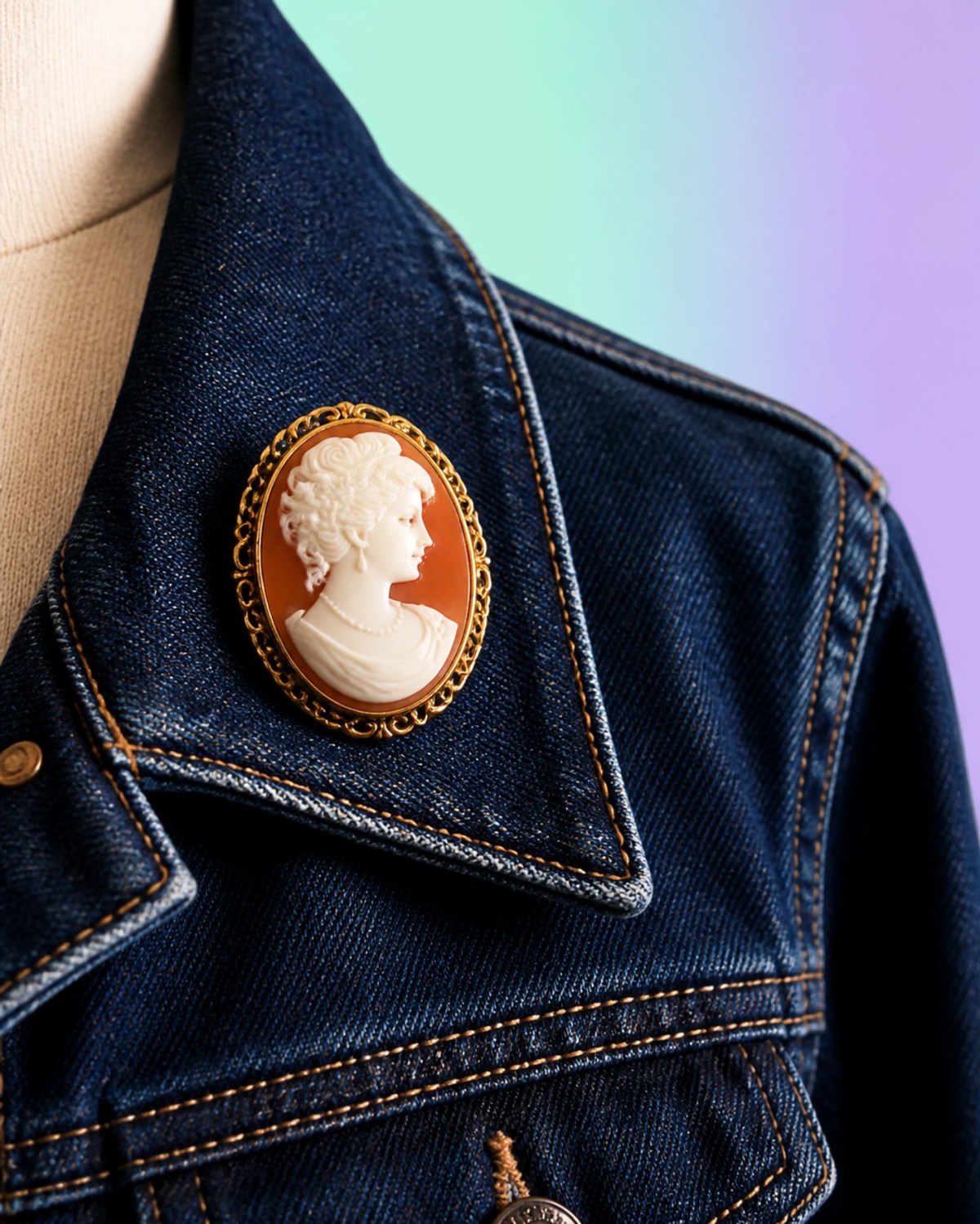
- The Denim Contrast: Pin a large lady head relief brooch onto the lapel of a structured denim jacket. The juxtaposition of rugged fabric and delicate carving creates a "cool-girl" vintage aesthetic.
- The Choker Look: Use a velvet ribbon to turn your brooch into a choker. Many Victorian brooches have a small loop (bail) on the back for this very purpose.
- The Power Suit: Add a gold-toned cameo to the lapel of a crisp white blazer. It adds a touch of authority and personality to professional attire.
- Grouping: Don't be afraid to wear multiple brooches at once. Grouping three or four smaller relief brooches on a coat pocket creates a curated, "museum-collector" look.
The Collector’s Edge: $7 Flat-Rate Shipping
We know that for serious collectors, one brooch is rarely enough. To make it easier for you to build your collection, Jewelry and More Auctions offers a $7 flat-rate shipping policy.
Whether you win one lot or all twelve of the Victorian brooches mentioned above (and maybe even a vintage victorian lady head relief brooch 9), your shipping cost remains a flat $7. This is a massive advantage for collectors who want to maximize their budget on the jewelry itself rather than on logistics.
Final Thoughts for the Collector
Collecting Victorian lady head relief brooches is a journey into the past. These pieces represent a time when art was wearable and every accessory was a conversation starter. When you bid on these lots, you aren't just buying jewelry; you are becoming the custodian of a miniature piece of history.
Take a moment to explore our current offerings. With the variety of materials and settings available in Lots 329 through 368, you are sure to find a "lady" that speaks to you. Happy bidding, and may your collection grow as beautifully as the pieces you seek.
For more information on our auction process, feel free to visit our homepage or check out our blog for more collector's guides and jewelry history.
Pingback: Patriotic Coins Auction Guide: How to Secure the Best 2026 Silver Eagles - Jewelry And More Auctions
Pingback: Daily Jewelry Highlights: 10 Rare Rings and Brooches to Boost Your Resale Margins Instantly - Jewelry And More Auctions
Pingback: Struggling For Resale Inventory? 50+ Estate Jewelry Bidding Ideas - Jewelry And More Auctions
Pingback: Why Everyone Is Talking About America Breathe Freely (And Why 'Fresh Air' is the New 2026 Gold Standard) - Jewelry And More Auctions
Pingback: Top 10 Daily Jewelry Highlights: Shimmering Marine Motifs, Rings, and Rare Brooches - Jewelry And More Auctions
Pingback: The Ultimate Guide to 2026 Silver Eagle Coins: Everything You Need to Win Big at Auction - Jewelry And More Auctions