The 2026 collecting calendar has a clear theme: 250 years of American history. The U.S. Mint’s Semiquincentennial program introduces dual-dated coins marked 1776–2026, while collectors and resellers are also watching 2026 Silver Eagles, patriotic medals, commemorative coins, and estate jewelry with renewed interest.
At Jewelry and More Auctions, our auctions bring these categories together. Bidders can explore a 250th Anniversary of the United States Coin, browse the broader coin auction category, and compare jewelry, memorabilia, and other collectibles in our live auctions.
Why 2026 Matters to Collectors
The United States will mark the 250th anniversary of the Declaration of Independence in 2026. Congress adopted the Declaration on July 4, 1776, establishing the date that became the central symbol of American independence.
A 250th anniversary is called a semiquincentennial: a word that sounds like it was designed by a committee with a fondness for Latin. In practical terms, it means a major national milestone with strong collecting appeal.
The U.S. Mint’s Semiquincentennial program includes circulating and collector coins across multiple denominations. The dual date 1776–2026 connects the nation’s founding era to its present-day anniversary. For collectors, the date provides an immediate organizing principle for coins, medals, sets, commemorative objects, and related memorabilia.
The 2026 Dual-Dated Coin Program
The 2026 program is more than a single commemorative issue. It is a coordinated redesign across U.S. coinage, with special anniversary themes appearing on circulating and collector products.
Several points matter when evaluating a 2026 issue:
- Dual dating: Look for the distinctive 1776–2026 date format.
- Denomination: Identify whether the coin is a quarter, half dollar, dollar, or another denomination.
- Mint mark: Proof and uncirculated issues may carry marks such as P, D, or W.
- Finish: Proof, uncirculated, enhanced uncirculated, and brilliant uncirculated finishes appeal to different buyers.
- Composition: Confirm whether the piece is clad, silver, or another metal.
- Packaging: Original Mint packaging, certificates, and unopened sets can affect buyer confidence and resale potential.
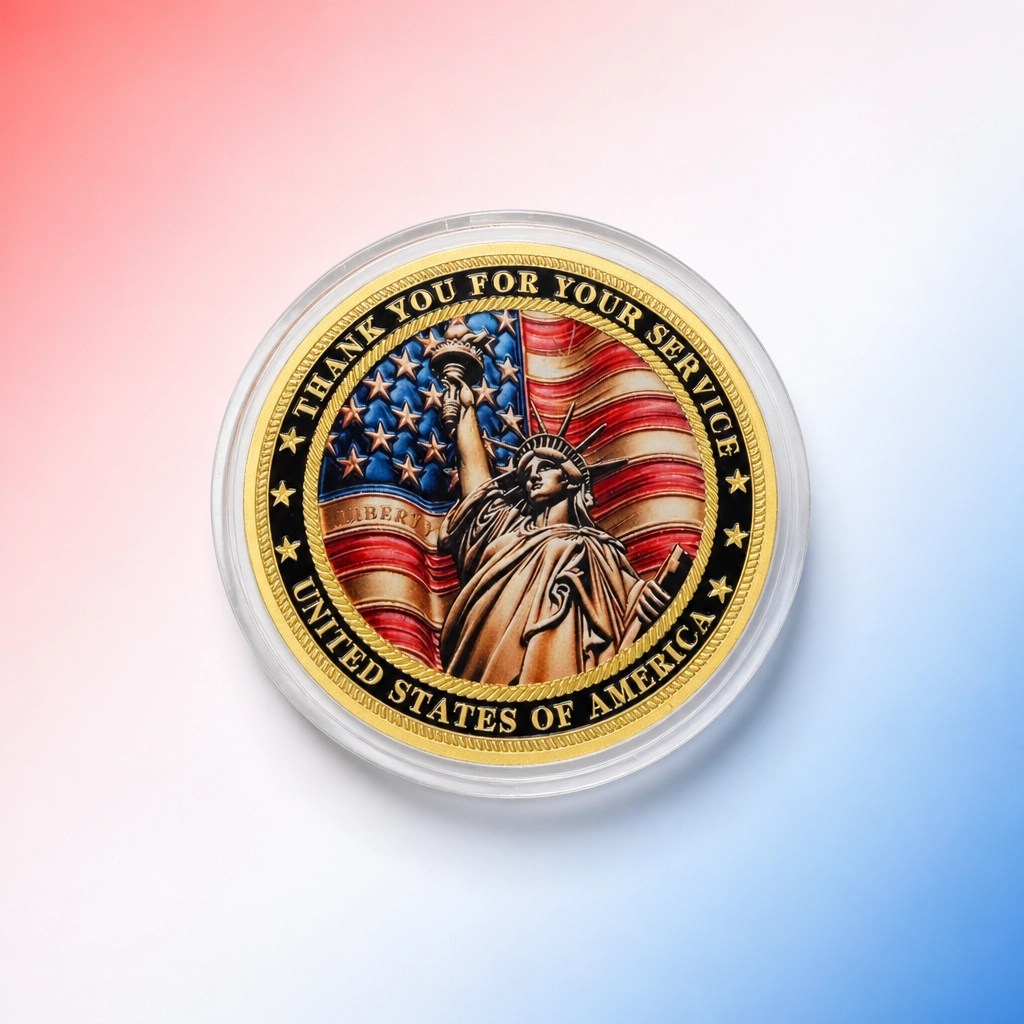
An auction listing may describe an anniversary-themed coin, medal, token, or challenge coin rather than an official U.S. Mint issue. Read the description carefully. “Patriotic” and “commemorative” are useful themes, but they do not automatically indicate legal-tender status, precious-metal content, or U.S. Mint production.
The Five 2026 Semiquincentennial Quarters
The five special 2026 quarter designs honor key moments and documents in American history:
- Mayflower Compact
- Revolutionary War
- Declaration of Independence
- U.S. Constitution
- Gettysburg Address
These are sometimes described informally as “America the Beautiful” anniversary quarters because they are history-focused, large-scale quarter designs. Technically, they are a separate Semiquincentennial program. The earlier America the Beautiful Quarters Program concluded in 2021.
The five 2026 designs are scheduled for release throughout the calendar year. The U.S. Mint began shipping Semiquincentennial coins to Federal Reserve Banks on January 5, 2026, allowing the first designs to enter circulation. However, collectors should avoid treating unofficial online calendars as final: a complete month-by-month public release schedule for every quarter design has not been firmly established.
This creates two collecting approaches:
- Circulation hunting: Search rolls, change, and bank boxes for circulated examples.
- Set building: Purchase Mint products containing all five designs, often with consistent finish and presentation.
For a serious collection, record the date acquired, mint mark, condition, source, and whether the coin came from a set or circulation. A simple inventory now can save considerable detective work later.
2026 Silver Eagle Coins: What to Watch
The 2026 American Silver Eagle program adds another major branch to the patriotic coins auction market.
The standard bullion American Silver Eagle remains a one-ounce, .999 fine silver coin with a $1 legal-tender denomination. Brilliant Uncirculated bullion coins are distributed through authorized purchasers and dealers rather than sold directly to the public through the Mint’s retail catalog.
The special collector issues are more directly tied to the Semiquincentennial:
- The 2026 American Eagle One Ounce Silver Proof Coin carries the dual date 1776–2026 and a Liberty Bell “250” privy mark. The U.S. Mint began accepting orders on February 26, 2026.
- The 2026 American Eagle One Ounce Silver Enhanced Uncirculated Coin uses a distinctive finish and also features the anniversary date and Liberty Bell “250” privy mark. Its official release date was July 21, 2026, with a reported mintage limit of 125,000.
Review the U.S. Mint’s American Eagle program for design and program information. In the secondary market, compare the coin’s finish, mint mark, packaging, condition, and certification. Do not assume that every 2026 Silver Eagle has the Semiquincentennial privy mark; the standard bullion issue and special collector issues are not identical.
How to Spot High-Value Estate Jewelry
Estate jewelry value usually comes from several factors working together: metal, gemstones, design, craftsmanship, condition, maker, and provenance. A dramatic appearance helps, but sparkle alone is not an appraisal method.
1. Start with hallmarks and maker’s marks
Use a 10× loupe or a strong magnifier to inspect:
- The inside of a ring shank
- A necklace clasp or pendant bail
- The back of a brooch
- Earring posts and backs
- Bracelet closures
Common marks include 925 or STERLING for sterling silver, and gold fineness marks such as 417, 585, and 750, which correspond broadly to 10K, 14K, and 18K gold. Marks such as GF, HGE, or RGP may indicate gold-filled or plated construction rather than solid gold.
A hallmark is evidence, not a final verdict. Counterfeit marks, later repairs, and incomplete stamping exist. Compare the mark with the piece’s weight, color, construction, and wear. The Lang Antiques jewelry identification reference is a useful starting point for period styles and terminology.

2. Examine gemstones carefully
For rings, brooches, and necklaces, note each stone’s:
- Type or likely identity
- Color, transparency, and saturation
- Cut and shape
- Approximate size
- Setting style
- Visible chips, cracks, abrasions, or loose mounting
Older cuts, unusual colored stones, natural pearls, and high-quality diamonds may attract specialist attention. Replaced stones can affect originality, particularly when one stone looks noticeably different from its neighbors.
Online photographs cannot establish a gemstone’s identity or treatment with certainty. For an important piece, obtain a written evaluation from a qualified gemologist or appraiser.
3. Judge craftsmanship and condition
Look for even prongs, clean bezels, crisp engraving, secure hinges, well-soldered joints, and smoothly finished edges. Hand-chasing, milgrain, filigree, and detailed engraving may indicate skilled construction or a period-specific technique.
Then inspect the weak points:
- Thin ring shanks
- Worn prongs
- Stretched chain links
- Loose clasps
- Repaired solder joints
- Heavy polishing that may have softened details
A well-made piece with honest wear may be more desirable than a poorly made piece described as “vintage.” Condition should be recorded precisely, not hidden behind decorative adjectives.
4. Investigate provenance
Provenance means the documented history of ownership or origin. Useful records include receipts, previous appraisals, branded boxes, family photographs, estate paperwork, and correspondence.
Provenance does not replace physical examination, but it can support an attribution, establish a connection to a designer, or explain why a piece has unusual historical significance. For insurance, estate planning, or high-value resale, consult a professional and specify the valuation type required. The Jewelers of America appraisal guide explains what consumers should expect from a proper appraisal.

A Collector’s Checklist for Coins and Memorabilia
Before bidding in a patriotic coins auction, confirm:
- Issuer: Is it from the U.S. Mint, another national mint, a private mint, or an unmarked maker?
- Object type: Is it legal tender, a commemorative coin, medal, token, challenge coin, or replica?
- Metal: Check stated composition and weight. Do not infer silver content from color.
- Condition: Look for scratches, rim damage, toning, wear, or packaging defects.
- Documentation: Check for certificates, original boxes, grading labels, and serial numbers.
- Market comparison: Review recent comparable sales rather than relying only on a retail asking price.
- Resale audience: Consider whether the likely buyer is a history collector, patriotic memorabilia buyer, silver investor, or gift purchaser.
Jewelry and More Auctions listings may include official-style anniversary themes alongside challenge coins, replicas, new jewelry, and vintage designs. Clear descriptions help bidders decide whether an item fits a collection, a retail inventory, or a gift assortment.
Why Resellers Watch Shipping Costs
Resellers need predictable acquisition costs. Jewelry and More Auctions charges a $7 flat-rate shipping fee for all auctions, regardless of the number of items purchased. That matters when one order contains several coins, rings, brooches, or necklaces: the shipping charge does not multiply with every winning item.
Every order also includes a free gift. For resellers, that creates an additional customer-service option: a small bonus for a buyer, a thank-you insert, or an extra value point in a curated bundle.
Review the current live auctions, set a maximum bid, and calculate your complete landed cost before bidding. Then compare the total with realistic resale prices, not optimistic ones. The best inventory is not always the most dramatic item; it is the item with a clear buyer, manageable risk, and room for margin.
Whether you collect 1776–2026 coins, search for 2026 Silver Eagles, or build an estate jewelry inventory, approach each lot with the same discipline: identify the object, verify its claims, evaluate condition, and document your purchase. Then buy collectible coins online with a strategy rather than a guess.
Social Media Hooks
- Five quarters. One historic anniversary. Learn what to look for in the 2026 Semiquincentennial program, then explore the live auctions.
- Hallmarks, gemstones, provenance, and profit: use this estate jewelry checklist before your next bid. Read the guide and start browsing.
- Build your patriotic collectibles inventory with $7 flat-rate shipping and a free gift with every order. Shop Jewelry and More Auctions.